
Why Image Compression Is Important for Website Speed and SEO is something every website owner should understand, especially if you want faster pages and better search rankings. Images make a website look attractive and professional, but large image files can slow everything down. When a page takes too long to load, visitors often leave before it even opens.
Image compression helps solve this problem by reducing the file size of images without making them look bad. Smaller images load faster, use less data, and make your website feel smooth and responsive. This is important because users today expect websites to load quickly, whether they are browsing on mobile or desktop.
From an SEO point of view, website speed is a key ranking factor. Search engines like Google prefer fast websites because they offer a better user experience. When your images are properly compressed, your pages load quicker, bounce rates go down, and search engines are more likely to rank your site higher.
In simple words, image compression is not just about saving space. It plays a big role in improving website speed, keeping visitors happy, and helping your site perform better in search results.

What Is Image Compression?
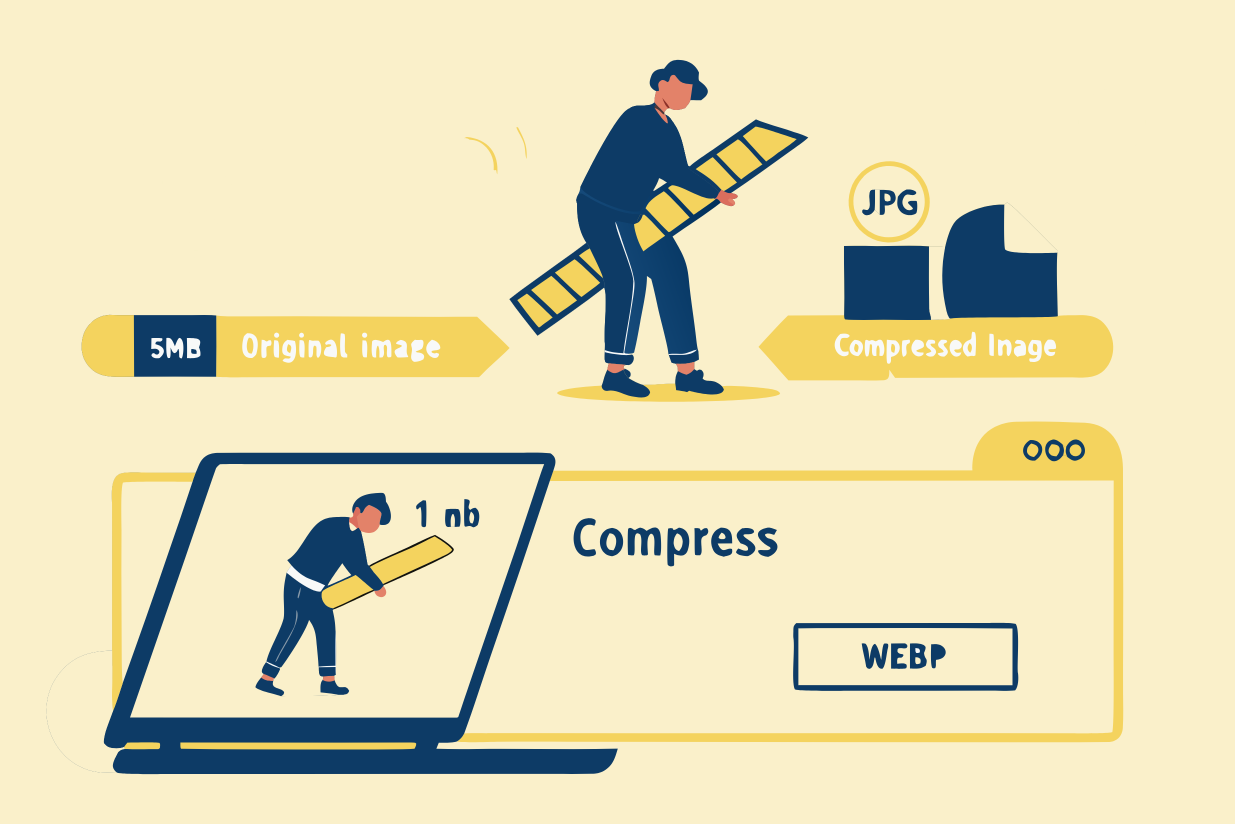
Why image compression is important for website speed and SEO becomes clear when you understand what image compression actually means. Image compression is the process of reducing the file size of an image so it loads faster on a website. The goal is to make images lighter without making them look blurry or low quality. Smaller image files help pages open quickly, which improves user experience and supports better SEO performance.
In simple terms, image compression removes extra data from an image that users do not really notice. This makes your website faster, saves bandwidth, and helps search engines rank your pages higher.
Image Compression Explained in Simple Terms
Think of image compression like packing a suitcase more efficiently. You still carry the same clothes, but they take up less space. When you compress an image, you keep the important visual details while reducing unnecessary information.
This is why image compression is important for website speed and SEO. Faster loading images mean visitors stay longer on your site, and search engines see your website as more user friendly. Compressed images also work better on mobile devices, where speed matters the most.
Common Types of Image Compression
There are two main types of image compression used on websites.
Lossy image compression reduces file size by removing some image data. This makes images much smaller and faster to load, which is great for website speed and SEO. If done carefully, the quality difference is barely noticeable.
Lossless image compression reduces file size without removing image data. The image quality stays exactly the same, but the file size reduction is smaller. This option is useful when image clarity is very important.
Both types show why image compression is important for website speed and SEO. Choosing the right method helps your website load faster while still looking professional.
How Large Images Slow Down Website Speed
How Image Compression Improves Website Speed
Why image compression is important for website speed and SEO becomes very clear when websites use large, unoptimized images. High resolution images look good, but when they are not compressed, they increase the total page size. This forces browsers to download more data before the page can fully load, which directly slows down your website.
Slow loading pages frustrate users and often cause them to leave before interacting with your content. Search engines also notice slow performance and may rank your site lower, which is why large images can harm both website speed and SEO.
Increased Page Load Time
Large images take longer to load because they contain more data. When a visitor opens your website, their browser has to download every image on the page. If the image files are heavy, the loading process becomes slow, especially on mobile devices or slower internet connections.
This is exactly why image compression is important for website speed and SEO. By reducing image file size, pages load faster, users stay longer, and your website performs better in search results.
Higher Data Usage
Uncompressed images also use more internet data. This can be a big problem for mobile users who rely on limited data plans. When a page consumes too much data, visitors may leave quickly to avoid extra usage costs.
Higher data usage leads to a poor user experience, which negatively affects website speed and SEO. Compressing images helps reduce data consumption, improves accessibility, and ensures your website runs smoothly for all users.
How Image Compression Improves Website Speed
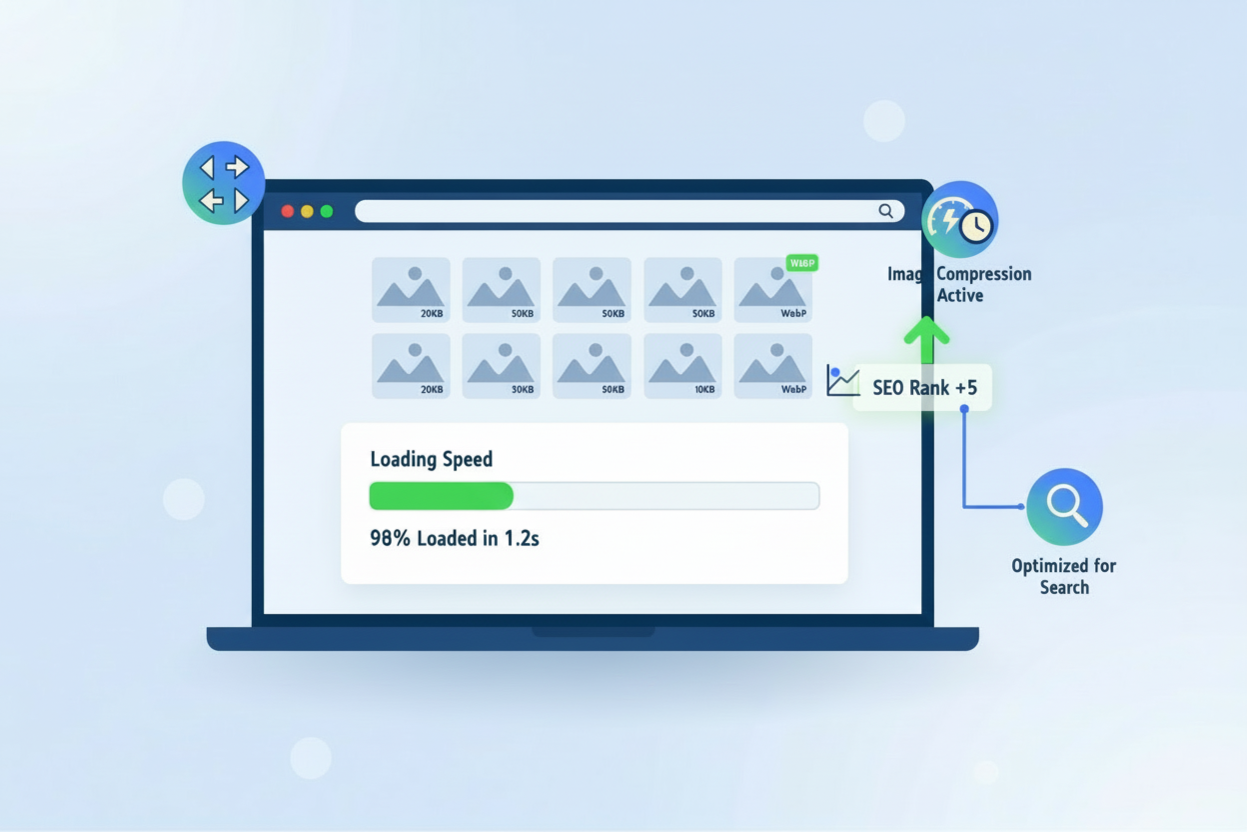
Why image compression is important for website speed and SEO is easy to understand when you see how compressed images affect performance. Image compression reduces the file size of images, which means browsers can load them much faster. When images are lighter, your web pages open quickly, even on slower internet connections.
Faster websites keep visitors engaged and send positive signals to search engines. This makes image compression a key part of improving both website speed and SEO.
Faster Page Loading
Compressed images load faster because there is less data to download. When a page has multiple images, even a small reduction in file size can make a big difference in loading time. This helps your website feel quick and responsive.
This is one of the main reasons why image compression is important for website speed and SEO. Faster page loading reduces wait time, improves performance scores, and increases the chances of ranking higher in search results.
Smoother User Experience
When images load smoothly, users can scroll, click, and interact with your website without delays. Pages feel stable and professional, which builds trust with visitors. Slow or broken image loading often leads to frustration and higher bounce rates.
By using image compression, you create a smoother user experience across all devices. This improves engagement, keeps users on your site longer, and supports better website speed and SEO overall.
Why Website Speed Matters for SEO
Why image compression is important for website speed and SEO becomes even more meaningful when you understand how strongly website speed affects search rankings. Search engines want to show users websites that load quickly and work smoothly. If your site is slow, it creates a poor experience, and that can hurt your SEO performance.
Website speed helps search engines decide which pages deserve higher rankings. Faster sites are easier to crawl, easier to use, and more likely to satisfy visitors.
Google Page Speed as a Ranking Factor
Google has clearly stated that page speed is an important ranking factor. Websites that load faster have a better chance of appearing higher in search results. This is especially true for mobile searches, where speed is critical.
This is why image compression is important for website speed and SEO. Compressed images reduce page load time, improve performance scores, and help your website meet Google’s speed requirements.
User Behavior Signals
User behavior also plays a big role in SEO. When a website loads slowly, visitors often leave quickly without reading the content. This increases bounce rate and reduces time spent on the page, which are negative signals for search engines.
Fast loading pages encourage users to stay longer, scroll more, and interact with your content. By improving website speed through image compression, you send positive user behavior signals that support better SEO rankings.
Role of Image Compression in Core Web Vitals
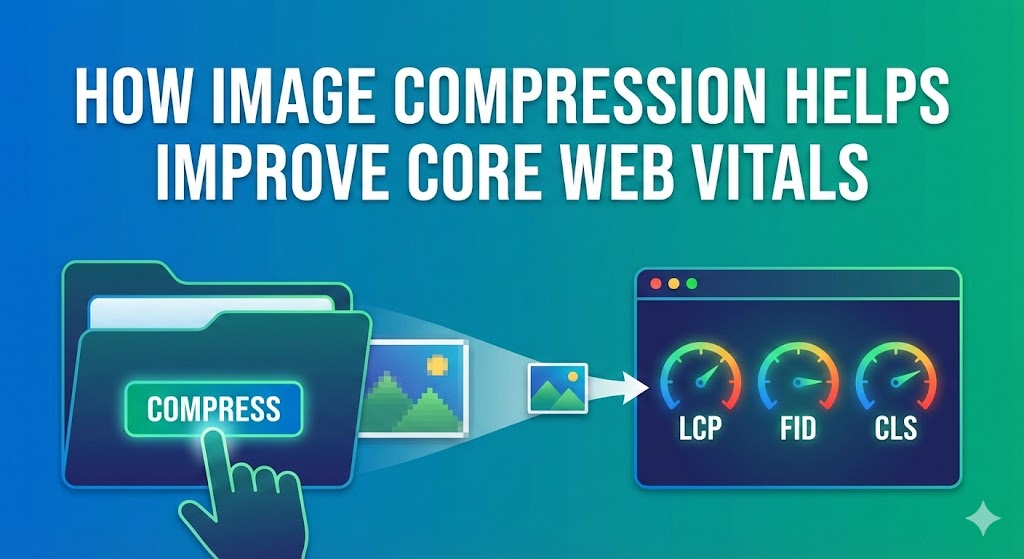
Why image compression is important for website speed and SEO becomes very clear when looking at Core Web Vitals. Core Web Vitals are performance metrics used by Google to measure real user experience on a website. They focus on how fast content loads, how stable the page is, and how smoothly users can interact with it.
Images are often the largest elements on a page. If they are not optimized, they can negatively affect these metrics. Image compression helps reduce image size, improve loading speed, and create a more stable layout, which directly supports better Core Web Vitals scores.
Largest Contentful Paint (LCP)
Largest Contentful Paint measures how long it takes for the main content of a page to load. In many cases, this main content is a large image such as a banner or featured image. If that image is heavy, LCP becomes slower.
This is why image compression is important for website speed and SEO. Compressed images load faster, helping the largest content appear quickly. A faster LCP improves user experience and increases the chances of better search rankings.
Cumulative Layout Shift (CLS)
Cumulative Layout Shift measures how much a page layout moves while loading. Large, unoptimized images can cause content to shift suddenly as they load, which frustrates users.
By using properly compressed images with correct dimensions, your website layout stays stable. This reduces unexpected movement, improves CLS scores, and strengthens both website speed and SEO performance.
Impact of Image Compression on Mobile Performance

Why image compression is important for website speed and SEO is especially noticeable on mobile devices. Most users browse websites on smartphones, often using slower networks or limited data plans. Large images can make mobile pages load very slowly, which leads to frustration and quick exits.
Image compression helps mobile pages load faster by reducing the amount of data needed to display images. This improves performance, supports mobile SEO, and helps your website meet modern user expectations.
Faster Loading on Mobile Networks
Mobile networks are not always fast or stable. When a website uses large, uncompressed images, it takes much longer to load on mobile connections. This can cause users to abandon the page before it fully loads.
This is why image compression is important for website speed and SEO on mobile. Smaller image files load quickly even on slower networks, helping your pages open faster and perform better in mobile search results.
Better Mobile User Experience
A fast loading mobile website feels smooth and easy to use. Users can scroll, tap, and read content without delays or broken images. This creates a positive experience and builds trust with your audience.
By compressing images, you improve mobile usability and keep visitors engaged. Better mobile user experience leads to lower bounce rates, longer visits, and stronger website speed and SEO performance overall.
Conclusion
Why image compression is important for website speed and SEO comes down to one simple idea: faster websites perform better. Large, uncompressed images slow down pages, frustrate users, and make it harder for search engines to rank your site well. Image compression solves this problem by reducing file size while keeping images clear and visually appealing.
When images are properly compressed, your website loads faster, works smoothly on mobile devices, and delivers a better user experience. This leads to lower bounce rates, improved Core Web Vitals, and stronger SEO performance. Search engines reward websites that are fast, stable, and user friendly.
In the end, image compression is not just a technical task. It is a smart SEO strategy that helps your website grow, attract more visitors, and stay competitive in search results. By making image compression a regular part of your optimization process, you set your website up for long term success.
Need to Compress or Convert Files?
Try CompressNow.in - Free, Fast & Secure file compression and conversion tools!

Author Bio – Tanishk Singh
Tanishk Singh is a Digital Marketing Strategist, SEO Specialist, and Web Technology Expert with over 4+ years of hands-on experience in building, ranking, and monetizing high-performance web platforms.
He has helped scale organic traffic for multiple education and SaaS websites, including increasing Shoolini Online’s SEO traffic from 800 to 20,000+ users in just 2.5 months using advanced content architecture, AI-driven SEO, and Google SGE optimization.
Tanishk specializes in creating AI-powered web tools, performance-optimized platforms, and SEO-focused websites that rank, convert, and generate consistent revenue.